Roof dryer vent cleaning in Paradise Valley
Covered by the $99. Not an add-on, not grounds for declining the job, and not something discovered at your door and renegotiated.
Calls answered 7am to 8pm · same-day service usually available
Included in the $99, here as everywhere.

Where terminations actually are in this town
Less predictable than anywhere else we work, because acre-minimum zoning means no repeated floor plans to learn from.
The large single-story estates generally terminate through a side wall, which sounds simple. The complication is length rather than height: a laundry room in the middle of a spread-out plan can sit forty feet from that wall with four turns in between.
The rebuilds and two-story houses mostly go out through the tile, with the familiar twenty-five to thirty-five foot vertical route.
The hillside properties can be almost anything. Stepped construction puts horizontal sections at intermediate levels and terminations on elevations nobody looks at. More on those.
The midcentury originals are frequently flat or low-slope with side-wall terminations, which is the most straightforward case in town.
The code arithmetic
Code permits a run of 35 feet of equivalent length. Each ninety-degree bend takes 5 feet off that allowance and each forty-five takes 2.5. Two bends leaves an effective 25 feet. Three leaves 20. Four leaves 15.
A forty-foot horizontal route through a large plan with four turns is well past the allowance as built. Nobody cut a corner and nothing is defective, since the code and the manufacturers both accommodate it. What it means practically is that the run has no tolerance at all, and a modest deposit on the pipe wall becomes the difference between a machine that works and one that does not.
Duct length allowances come from the International Residential Code, Section M1502.4. Local amendments vary, so confirm with the Town of Paradise Valley before altering a duct route.
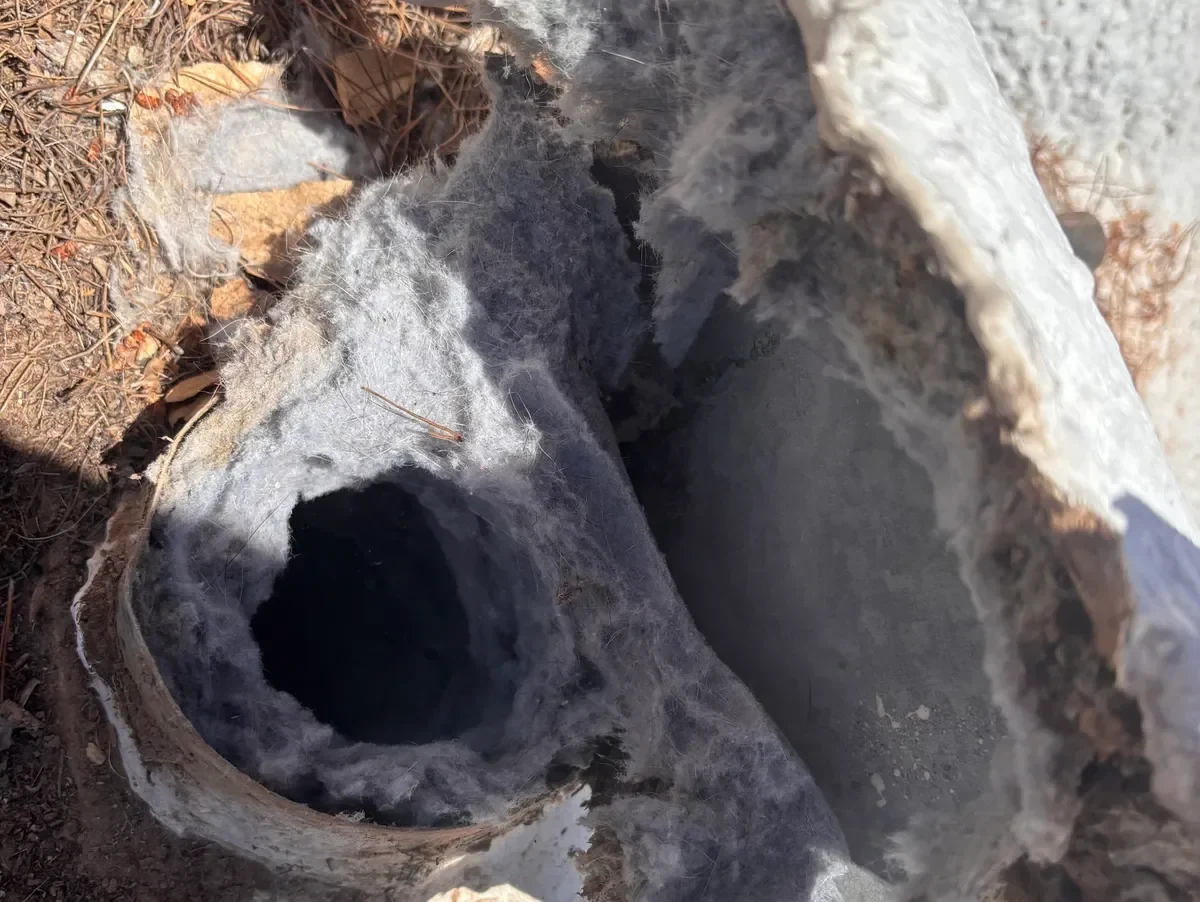
Why long runs fill faster
Length
More pipe is more internal surface for material to adhere to. Forty feet carries five times the surface of eight.
Bends
Airflow slows through every turn and slower air cannot hold what it carries. Each bend becomes a deposit point, the channel narrows, the air slows further, and more falls out. The process compounds on its own.
Horizontal sections
This is the Paradise Valley problem specifically. In a vertical run, material that fails to clear the top comes back down toward the appliance, where it is reachable. In a long horizontal run it settles in the middle and stays, neither returning to the dryer nor continuing to the termination. That position is exactly what a single-ended clean cannot address, and it is why we work both ends here as standard rather than as an upgrade.
Walking your roof
Enough years on tile means knowing how to move across one and which points carry weight. Concrete tile is unforgiving, and a fractured piece becomes water ingress the first time a storm properly delivers. On a house with plaster ceilings and finish work worth protecting, that is not a minor consequence.
Where a roof will not take us safely, we stay off it. Steep pitch, heat damage, tile already cracked, or a membrane roof that should not be walked. The run gets cleared from inside instead and you hear exactly that from us.
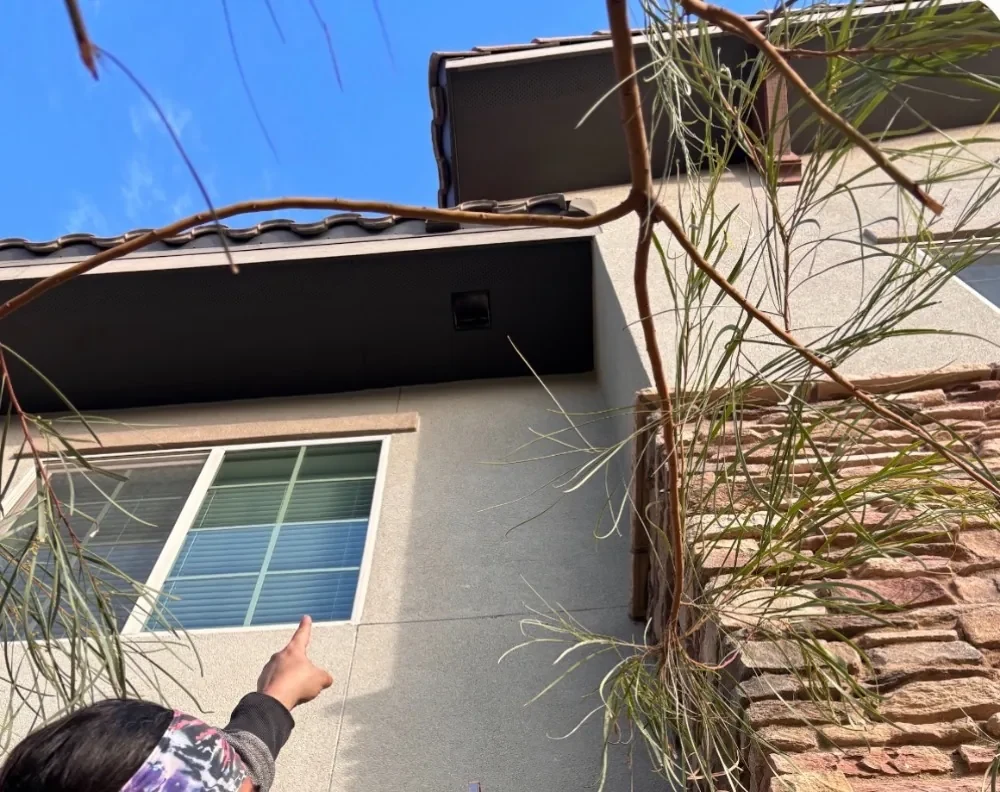
Worth sorting while we are up there
- A flap corroded or lint-jammed open, which is an open door for wildlife
- A hood missing or split, letting rain into the duct
- No guard on a termination facing open ground
- A termination screened over by a previous owner, which code does not permit because screens pack with lint
- A cap never properly sealed into the roof
We are not roofers and will not pretend otherwise. But we are up there anyway, and telling you what we can see costs nothing.
Roof vent questions
Do you charge extra for roof terminations?
Never. It is covered by the $99, here as everywhere else.
Will you go up on tile?
Yes, and we know where the load-bearing points are. Concrete tile splits where weight lands wrong. If a roof is not safe to walk we say so and clear the run from inside instead, and you are told that is what happened.
What about the flat and low-slope midcentury roofs?
A different access problem rather than an easier one. Membrane and built-up roofing damages differently from tile, and we treat it accordingly. Many of those houses terminate through a side wall anyway.
Is there a limit on run length?
There is, and it catches a lot of houses here. Code permits 35 feet of equivalent length and deducts 5 feet per ninety-degree bend. Three bends leaves roughly 20 feet. A long horizontal route through a large single-story plan can be past that before any lint is involved.
How do I know where mine terminates?
On the large single-story plans it is usually a side wall, though possibly one you never walk past. On the rebuilds and two-story houses it is generally the roof. On hillside properties it could be almost anywhere, which is why we trace it.
What if the termination is damaged?
You get told and shown. A split hood or a flap stuck open is how birds and rain get in, and dealing with it while we are already up there beats a separate visit.
Calls answered 7am to 8pm · same-day service usually available
$99 per vent, roof access included.