Dryer vent cleaning in Mummy Mountain and Cheney Estates
Where sixty-year-old originals sit next door to houses finished last year, which means two completely different jobs on the same street. $99 flat per vent, roof terminations included.
Calls answered 7am to 8pm · same-day service usually available
Address, a date and time that suits, and how many machines are on the property.
The Mummy Mountain slopes and the streets below, north of Lincoln
Two housing stocks on one street
The area around Mummy Mountain has been continuously rebuilt for decades, so what you find varies wildly house to house. An original from 1958 can sit directly beside something completed in the last two years.
Those are not variations on a theme, they are two different jobs.
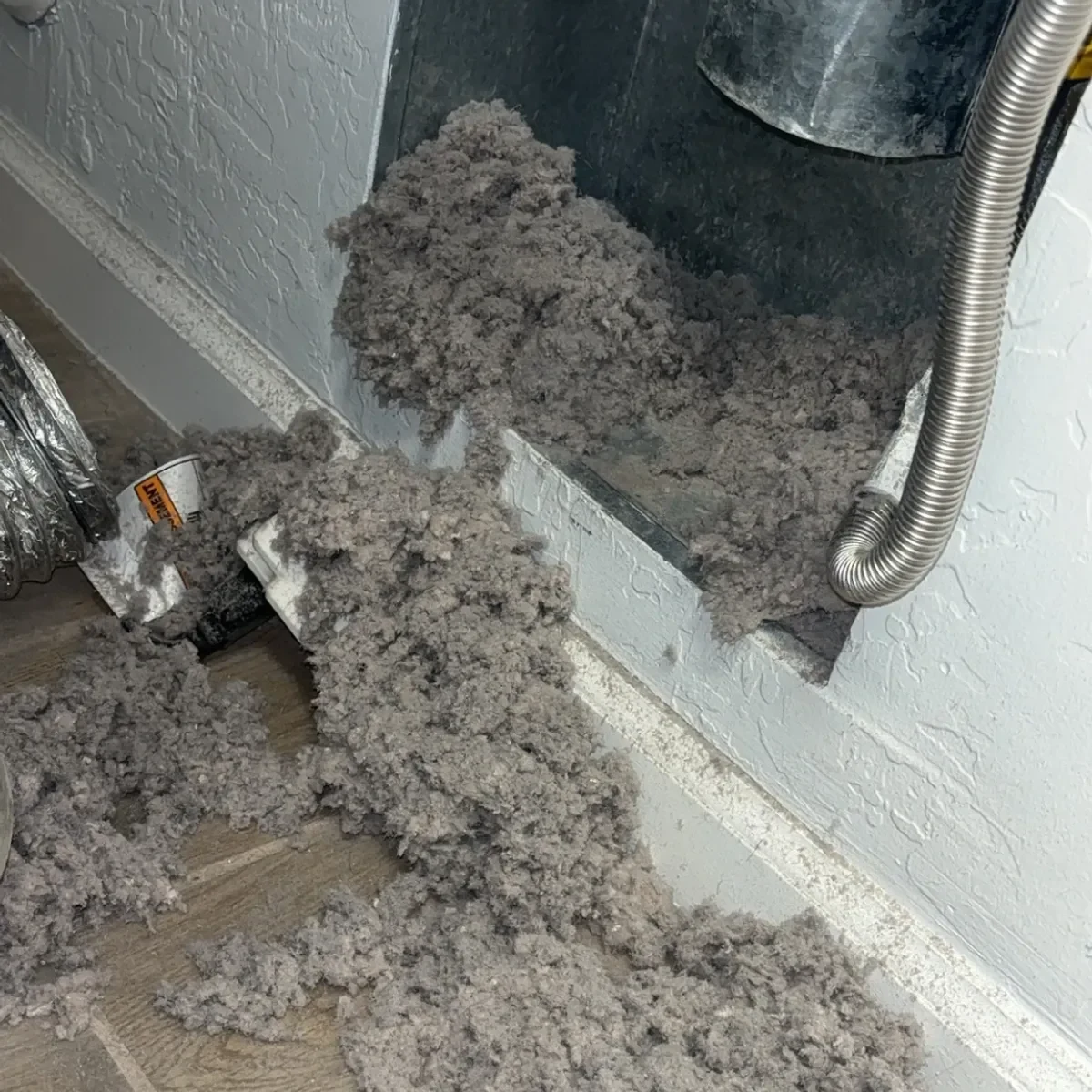
The originals are typically low, spread out, with flat or low-slope roofs and short side-wall terminations. Mechanically simple. The problem is that a good number have never been opened in sixty-odd years, and the piles they produce are the largest we make anywhere in this town.
The rebuilds are larger, often two-story, with tile roofs, multiple laundry rooms and long runs. Different problem entirely, and the newest ones can still be carrying construction debris left in the pipe from the build.
What a teardown rebuild leaves behind
This is specific to areas with heavy rebuild activity and it is not widely discussed.
A duct is installed early, before drywall, and then sits open while every subsequent trade works around it. Drywall dust in quantity, sawdust, occasionally an offcut or a piece of packaging. There is no stage of a residential build where anyone is assigned to inspect that duct before handover.
It is rarely dangerous on its own. What it does is give lint a base to build on from day one, so a run that ought to have taken a decade to become a problem gets a head start it never needed.
If your house was completed in the last few years and nobody has looked at the ducts since, that is worth doing once, early, while any genuine installation fault can still go back to the builder.
Renovation history matters more than build date
The practical point for this whole area. A house that has been significantly remodelled twice has a duct system that reflects both remodels, and neither of them necessarily thought carefully about it.
What we find as a result:
- Runs extended during an expansion without anyone recalculating the length against code allowance
- Original short runs abandoned in place with a longer replacement routed around new structure
- A laundry room relocated to a more convenient spot and a much worse duct route
- Second machines added during a remodel with the duct treated as an afterthought
- Terminations that ended up somewhere nobody looks
None of this is a criticism of anybody's builder. A dryer duct is the least glamorous line item in a renovation and it gets the attention that implies.
Source: National Fire Protection Association, Home Fires Involving Clothes Dryers and Washing Machines.
How the job runs here
- Establish the route. We follow where each duct actually goes, inspect the termination, and check the flexible length behind the appliance. On houses this size the run is frequently nowhere near where you would assume.
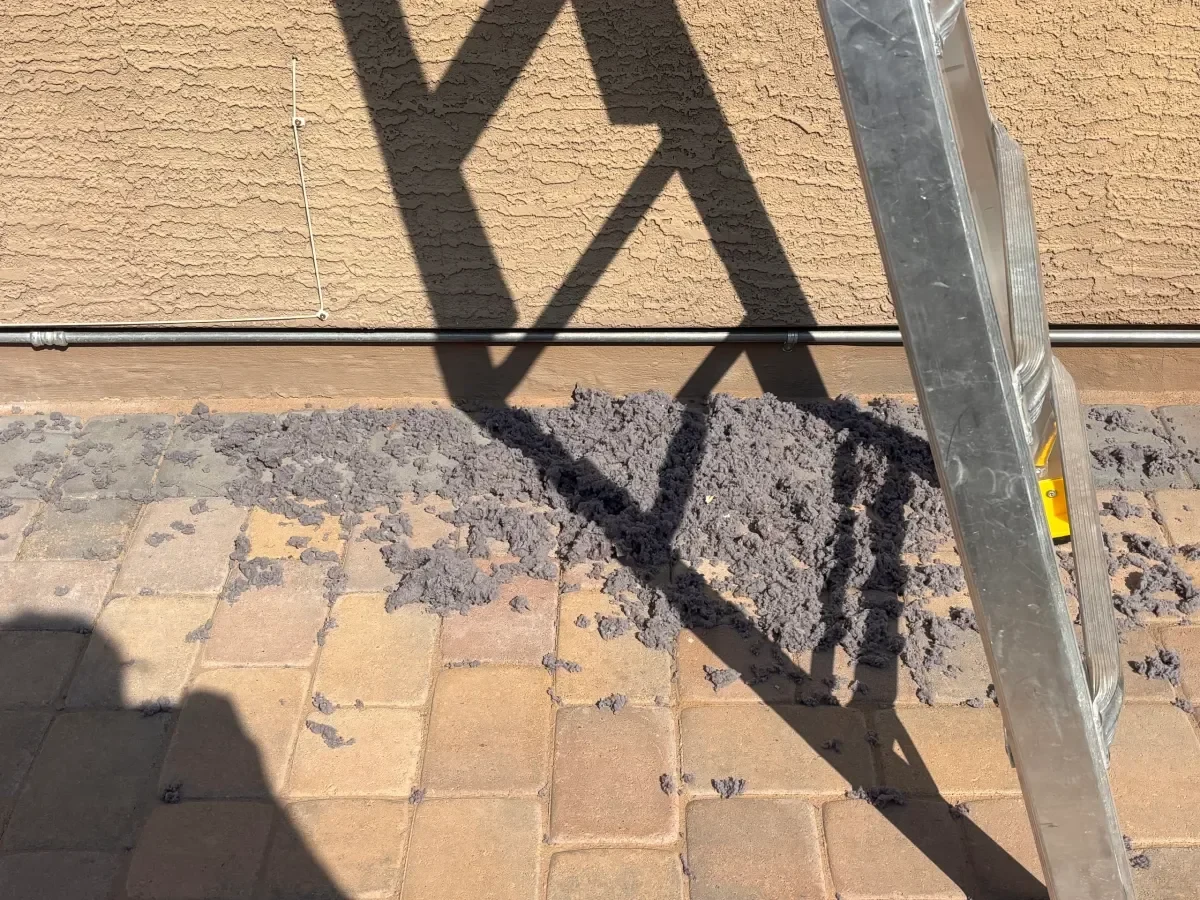
- Exterior first, machine running. The appliance stays powered throughout so its own exhaust drives what we loosen out and away from the termination, rather than letting it drift back down the run. It scatters lint outside. Clearing that is part of the job.
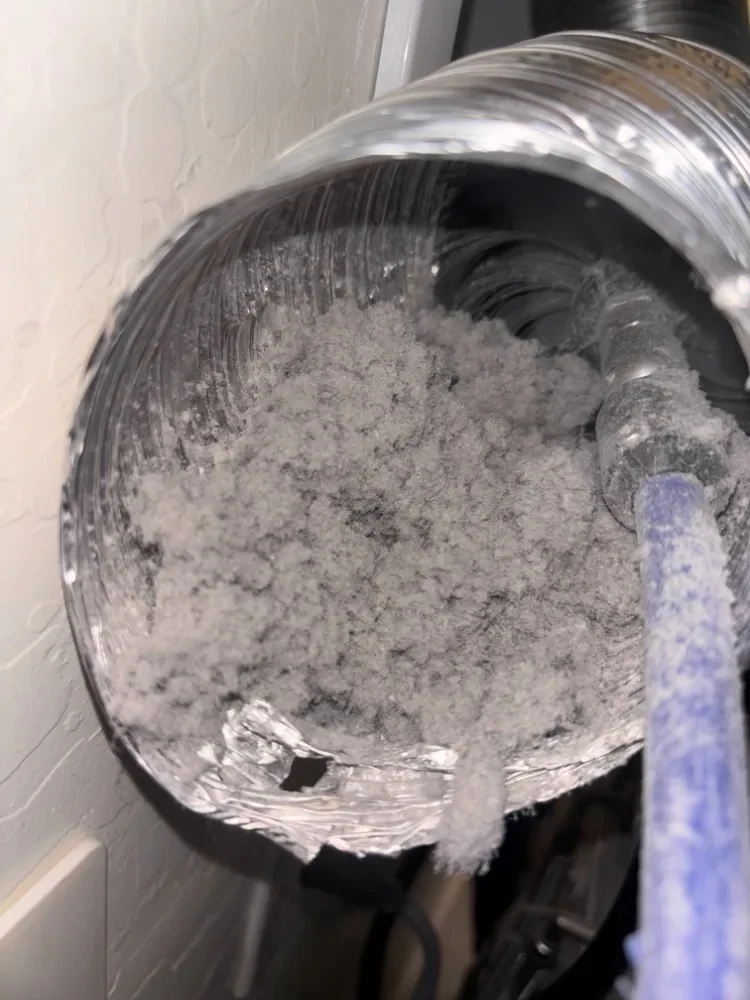
- Then the interior. Power off, hose uncoupled, appliance drawn clear of the wall. The brush goes in from that end, material comes back toward us, and the vacuum removes it rather than leaving it to resettle.
- Both ends on the long runs. Which, in this town, is most of them. A brush entering from one side never properly reaches the far half of a forty-foot horizontal route.
- Reassembled, run, and shown to you. Every machine goes back where it belongs and gets started, and what came out of each one is left where you can see it.
How often it needs doing
Ten months in an ordinary household. Treat it as scheduled maintenance rather than a reaction to a problem.
- Every 10 months on a main household machine
- Every 4 to 6 months where the house runs full, or where staff and guests put heavy volume through one appliance
- Monthly on commercial equipment
- Before and after a seasonal absence if the property closes up for part of the year
The trap in a house this size is that a secondary machine gets forgotten entirely. A guest house dryer used four times a year still has a duct, still has a termination, and in plenty of properties has never been opened since the place was built.
Questions from Mummy Mountain and Cheney Estates owners
Is there a surcharge for Paradise Valley?
There is not, and that is deliberate. It is $99 per vent here and $99 per vent in every other town we work. The address does not get its own pricing. Where the figure rises is simply if there is more than one dryer on the property, and each additional one is the same $99 rather than a premium.
What happens when I ring?
We take the address, a date and time that suits, and how many machines are on the property. That last one matters mainly so we know how long to allow. You get the price on that call, there is no estimate visit, and most properties are fitted in within the same week. Phone is answered 7am to 8pm.
How often does it need doing?
Ten months on a main household machine. Four to six where the house runs full or the property sits near open ground and takes more dust. Monthly on commercial equipment. And if the property closes for part of the year, before or shortly after that absence rather than mid-season.
We have several dryers. Do they all need it?
Each has its own duct and its own termination, so each needs its own attention. The secondary ones are usually in worse condition than the main laundry, because light use means nobody notices them declining and plenty have never been opened since construction. All of them get done in the same visit.
How do I know whether it is even needed?
Two free checks. If the appliance has put up an error code, that points at the duct roughly 95 percent of the time. Second, run it on the no-heat setting and feel the air at the outside termination. Strong steady flow means clear, weak or nothing means restricted. Premium appliances are not exempt from either.
Can you work with our property manager?
Yes, and a good share of our work here is arranged that way. We deal with access and timing directly with them, and the invoice goes wherever you want it.
Elsewhere in Paradise Valley
Camelback Country Estates · Clearwater Hills · Palo Cristi and Sundown Estates · Casa Blanca Estates and Judson · Tatum Canyon and Finisterre
Calls answered 7am to 8pm · same-day service usually available
$99 per vent, roof access included. Call or text.