Professional dryer vent cleaning in Paradise Valley
$99 per vent, flat. Roof terminations included. The same figure we charge in every other town we work, because 85253 does not change what the job actually is.
Calls answered 7am to 8pm · same-day service usually available
Address, a date and time that suits, and how many machines are on the property.
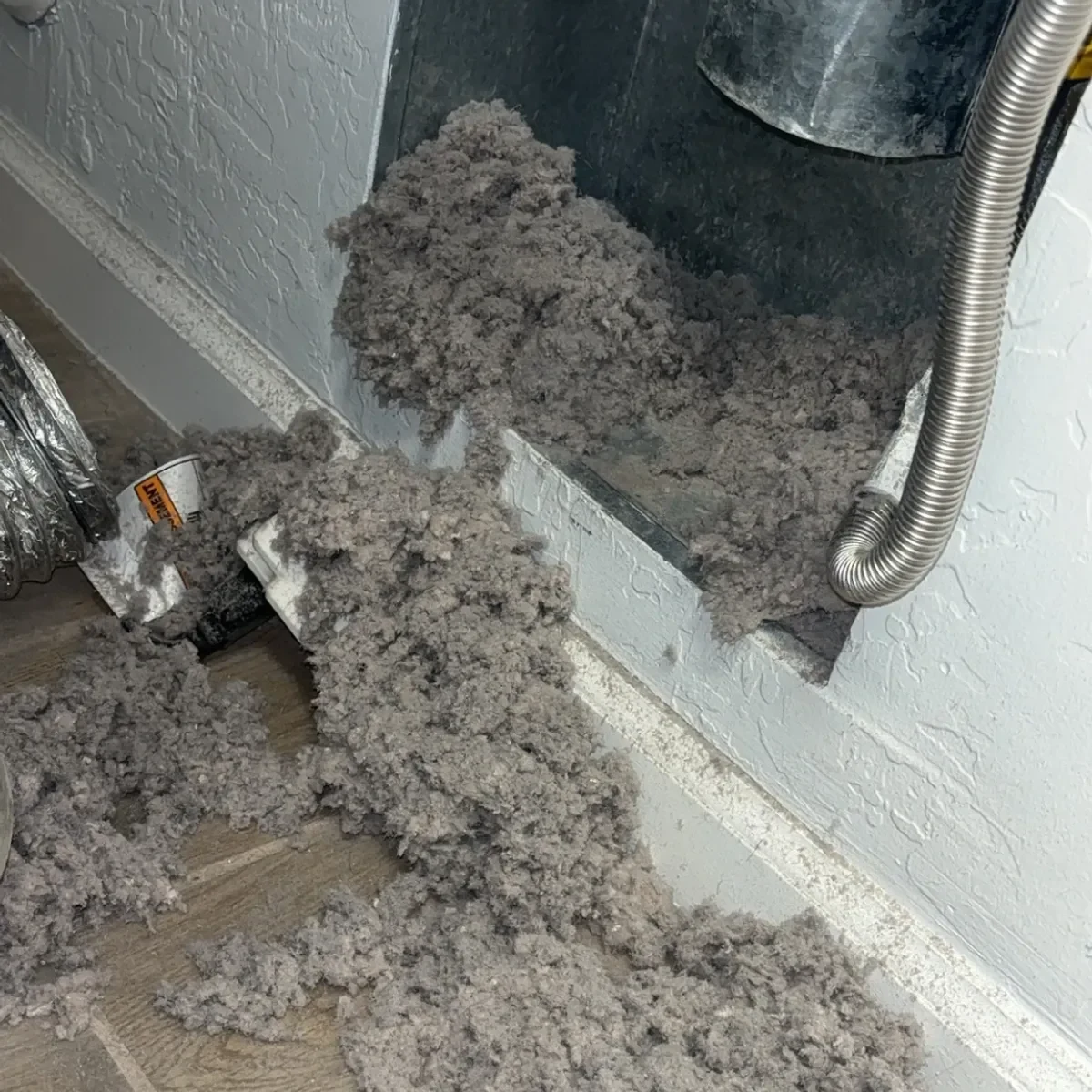
The zip code does not change the price
Worth putting near the top, because everybody in 85253 has had this experience.
You ring three companies for identical work. The quotes come back at wildly different numbers, none of them published anywhere, and at least one of them assumes that an address on Camelback means you will not ask twice. Same brush, same duct, different invoice.
Ours is $99. It is $99 in every town we work, and Paradise Valley does not get its own version of it.
That is not a discount and we are not pretending it is charity. It is what the job costs to do properly, and publishing it means there is nothing to negotiate at your door and no reason to wonder afterward whether you were quoted the address rather than the work.
Where the number does go up is honest and simple: each additional dryer on the property is another $99. On an estate with a casita, a guest house and a main laundry, that is three vents and three prices, all of them the same price, all of them done in one visit.
- Address, and a date and time that suits. If somebody manages the property, give us their details instead and we will deal with them directly.
- Tell us how many dryers. Main laundry, upstairs, casita, guest house, pool house. Each one is $99 and we will need to know how long to allow.
- Price on that call. No estimate visit, no walkthrough, no number that appears later.
- Into the diary. Most properties land inside the same week and same-day is often available. Phone answered 7am to 8pm.
Has the machine put up an error code?
Start here, because it is the most reliable single indicator available and almost nobody is told about it.
A dryer showing a code is the duct roughly 95 percent of the time.
Current appliances detect this well. The control board tracks cycle duration against exhaust temperature, and when a restriction pushes those two out of agreement it posts a fault or ends the cycle early. Every manufacturer names it differently. The condition beneath the label never varies: the exhaust is not getting out of the building.
What usually happens next in a house like this is that somebody calls the appliance service the machine came with, pays for the visit, and is told the dryer is in perfect order and the duct is obstructed. Check the duct before paying anyone to open up a premium appliance.
It is worth knowing that high-end machines are not exempt from this. A well-built dryer in a well-built house still cannot push air through a forty-foot run that has not been opened since 2009.
Why the houses here are genuinely harder work
None of that means the job is trivial. Paradise Valley presents real difficulties, they are just not the sort that justify a different rate.
One-acre minimum zoning changes everything
There is no tract housing here in any meaningful sense. Acre-plus lots and individually designed homes mean no two duct routes are the same, and the experience that lets us predict a Gilbert floor plan before arriving is worth very little on these streets. We trace rather than assume.
Long horizontal runs
A wide single-story plan can place a laundry room a very long way from any exterior wall. Thirty-five to forty-five feet with four turns is routine, which puts it past the code allowance before any lint is involved and leaves the run with no tolerance at all.
More than one machine
Casitas, guest houses, pool houses, second laundries. Each has its own duct and its own termination, and the lightly used ones are almost always in worse condition, because nobody notices a guest house dryer declining. Full page on multi-machine properties.
Sixty-year-old originals beside last year's builds
The midcentury houses in Palo Cristi and Sundown have short simple runs that have frequently never been opened in seven decades. The rebuilds around Mummy Mountain are larger, more complex, and sometimes still carrying construction debris from the build. Same street, different job.
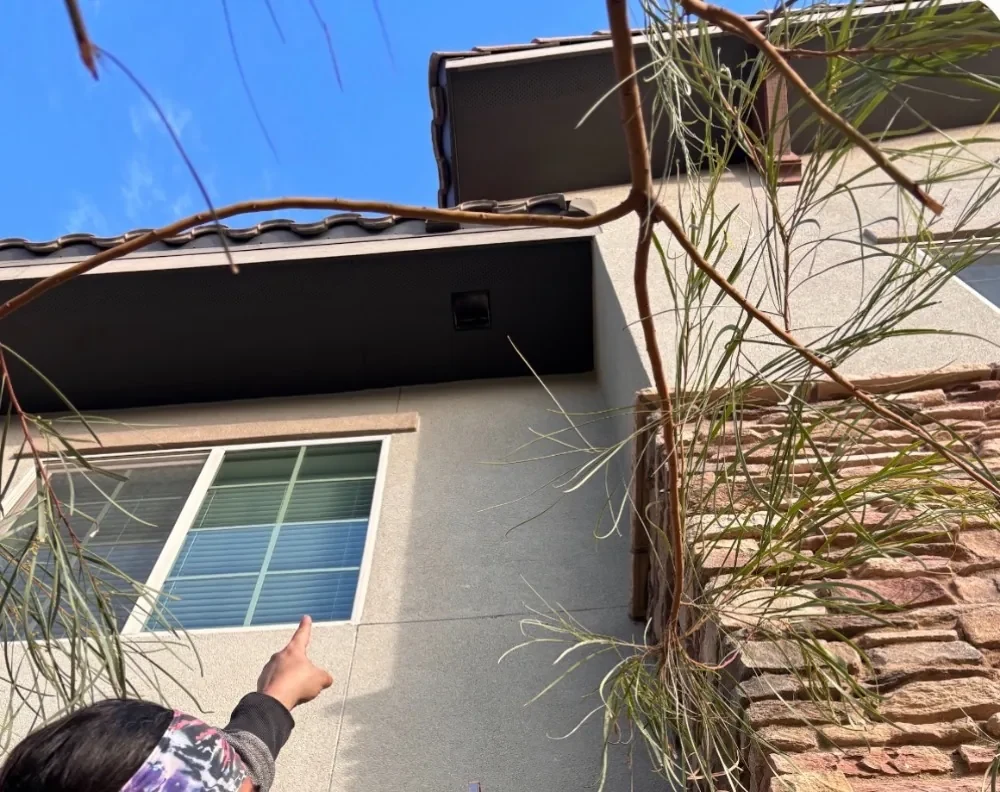
What the setting does to a duct
Open ground on the boundary
The north and hillside edges back onto undeveloped desert and preserve. More birds hunting for nesting sites, and more fine airborne material. Both end up in terminations and ducts.
Dust binds with lint
Mineral dust does not simply sit in the airflow the way loose lint does. It bonds and adheres to the pipe wall, which is why a blower-only clean sometimes produces no improvement whatsoever. A full-length brush removes it. Air alone does not.
Monsoon is when it surfaces
Humidity climbs through July and August and a machine already labouring against a restriction stops coping. Nothing changed in the duct. The restriction had been there since winter, and the weather removed the margin.
Seasonal absence
A house closed for months is a house where nothing gets noticed and any termination that has stopped sealing gets an uninterrupted invitation. The right time to look is before closing up or shortly after reopening.
Tile and low-slope roofs both
The rebuilds are under concrete tile, which fractures where weight lands wrong. The midcentury originals are frequently flat or low-slope, which is a different access problem entirely. We deal with both, and where a roof is not safe we clean from inside and say so.
What a restricted duct is actually doing
A dryer is better understood as an air mover than a heater. Room air enters, gets warmed, passes through the drum collecting moisture, and leaves through the vent. All of it depends on that final step.
Restrict the duct and the moisture stays in the drum. That is the symptom. Three worse things sit behind it.
The appliance is wearing itself out
Every dryer carries a thermal fuse meant to cut power before overheating. A restriction has it intervening routinely while the heating element works outside its intended range. A premium machine is not exempt from this, and replacing one costs considerably more than $99.
A fire risk is accumulating
The figures below are published by the National Fire Protection Association, not by us. Failure to clean is the largest single contributing factor in dryer fires, and lint is the material most likely to catch first.
Source: National Fire Protection Association, Home Fires Involving Clothes Dryers and Washing Machines.
Moisture is going into the structure
Every load has to discharge its humidity somewhere. Restricted, it backs into the wall cavity, which in time becomes damaged drywall and mould. In a house with plaster, millwork or anything else expensive to put right, that is a considerably larger bill than it would be elsewhere.
Signs it needs doing
- The machine has put up an error code, which points at the duct roughly 95 percent of the time
- Clothes come out warm but still damp after a full cycle
- Two cycles have quietly become normal
- The laundry room gets noticeably hot while it runs
- A burning smell, or a musty one, during a cycle
- The screen is catching noticeably less than it did
- The machine cuts out partway through
- A secondary dryer nobody has thought about in years
- It has been over ten months, or nobody has ever done it
How we do it
- Establish the route. We follow where each duct actually goes, inspect the termination, and check the flexible length behind the appliance. On houses this size the run is frequently nowhere near where you would assume.
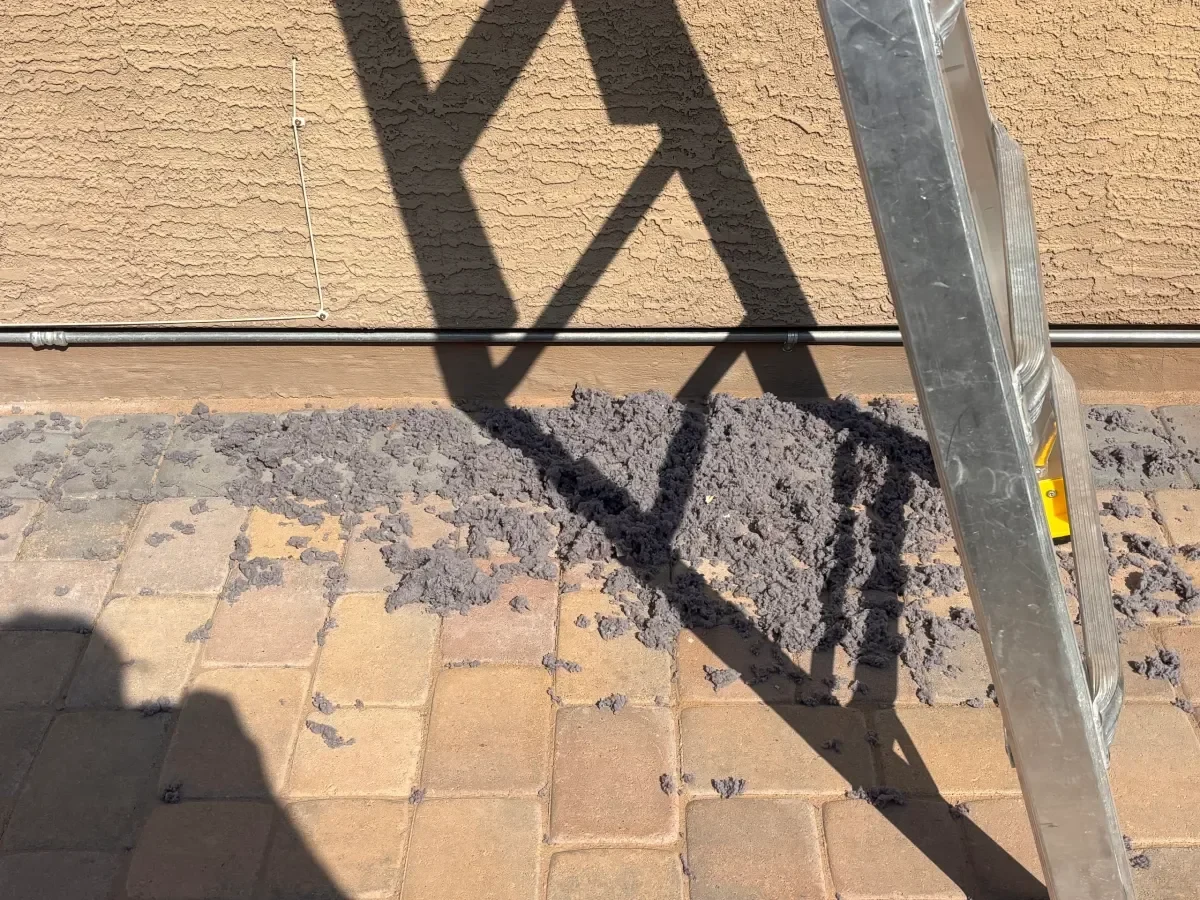
- Exterior first, machine running. The appliance stays powered throughout so its own exhaust drives what we loosen out and away from the termination, rather than letting it drift back down the run. It scatters lint outside. Clearing that is part of the job.
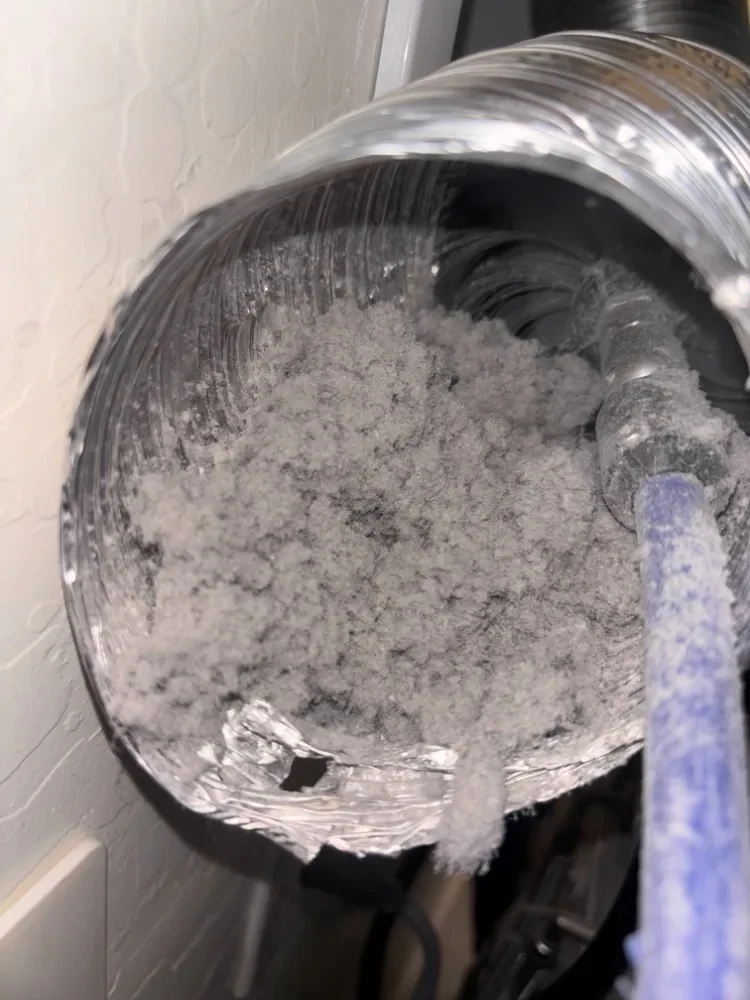
- Then the interior. Power off, hose uncoupled, appliance drawn clear of the wall. The brush goes in from that end, material comes back toward us, and the vacuum removes it rather than leaving it to resettle.
- Both ends on the long runs. Which, in this town, is most of them. A brush entering from one side never properly reaches the far half of a forty-foot horizontal route.
- Reassembled, run, and shown to you. Every machine goes back where it belongs and gets started, and what came out of each one is left where you can see it.
How often it needs doing
Ten months in an ordinary household. Treat it as scheduled maintenance rather than a reaction to a problem.
- Every 10 months on a main household machine
- Every 4 to 6 months where the house runs full, or where staff and guests put heavy volume through one appliance
- Monthly on commercial equipment
- Before and after a seasonal absence if the property closes up for part of the year
The trap in a house this size is that a secondary machine gets forgotten entirely. A guest house dryer used four times a year still has a duct, still has a termination, and in plenty of properties has never been opened since the place was built.
What it costs
| Service | Price | What it is |
|---|---|---|
| Standard dryer vent clean | $99 | Per vent. Full run, brushed from both ends where the route calls for it. Roof or side wall. |
| Each additional vent | $99 | Casita, guest house, pool house, second laundry. Same visit. |
| Lint screen chamber clean | +$98 | Optional, and the one we make the case for. |
| Hose upgrade | +$98 | Optional. Foil out, rigid transition duct in. |
Full pricing detail, and what the extras actually do.
Where we work
Paradise Valley. 85253. That is the entire service area.
Camelback Country Estates · Clearwater Hills · Cheney Estates · Casa Blanca Estates · Judson · Finisterre · Palo Cristi · Sundown Estates · Tatum Canyon · Mummy Mountain Park · Paradise Reserve · Camelback Foothills · Desert Fairways · Merrill Heights · Cheney Place · Arcadia Heights · Stonegate · Casa Ynez
Camelback Country Estates · Clearwater Hills · Mummy Mountain and Cheney Estates · Palo Cristi and Sundown Estates · Casa Blanca Estates and Judson · Tatum Canyon and Finisterre
Common questions
What does dryer vent cleaning cost in Paradise Valley?
$99 per vent, flat, with roof terminations included. That is the same figure we charge in every other town, because the address does not change the work. Two optional extras at $98 each: clearing the chamber under the lint screen, and replacing foil transition hose with rigid duct.
Why is it not more expensive here?
Because the job is not more expensive here. A forty-foot run takes longer than a ten-foot one and that is reflected in how long we allow, not in a different rate for the postcode. Publishing the number means there is nothing to negotiate at your door.
We have more than one dryer. How does that work?
Each vent is $99 and they get done in the same visit. Main laundry, upstairs, casita, guest house, pool house. Tell us how many when you ring so we know how long to allow.
Is roof access included?
Yes, always. Charging separately for it would be charging you for how your house was built.
How often should it be done?
Ten months on a main household machine, four to six where the house runs full or sits near open ground, monthly on commercial equipment. And before or after a seasonal absence rather than mid-season.
Can you deal with our property manager?
Yes, and a good share of the work here is arranged that way. We handle access and timing with them and the invoice goes wherever you want it.
Card accepted?
Yes, with a receipt by email or text.
Calls answered 7am to 8pm · same-day service usually available
$99 per vent, roof access included. Phone answered 7am to 8pm.